
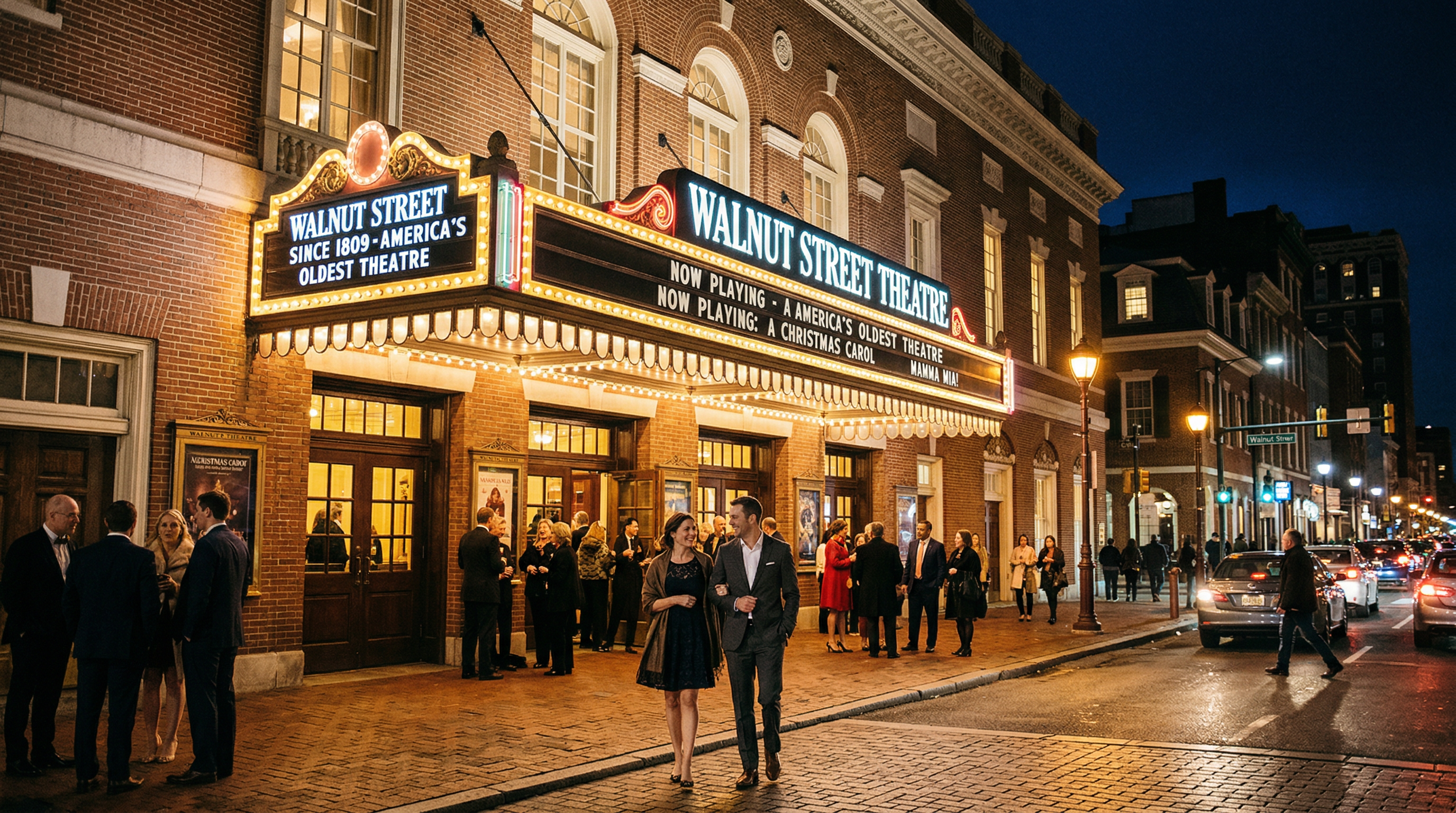
History Comes Alive: 1776 Opens at the Walnut Street Theatre

The musical 1776 opened at the Walnut Street Theatre — America's oldest theater — just blocks from Independence Hall, arriving at the perfect moment in Philadelphia's 250th anniversary year.
There are perhaps five blocks between the Walnut Street Theatre and the place where the Declaration of Independence was signed. In most American cities, that kind of proximity to founding history would be remarkable. In Philadelphia, it is simply context — the background radiation of a city that has been living alongside its own significance for 250 years. But on Wednesday night, as the musical 1776 opened its run at America's oldest theater, that proximity felt like something more than coincidence.
The Walnut Street Theatre, established in 1809 and still operating at 825 Walnut St, is one of those institutions that has outlasted every era of American cultural life. It has hosted presidential visits, survived fires and economic downturns, and continued staging productions for a Philadelphia audience that treats live theater as a civic birthright. The building's age alone would make it a destination — but the Walnut also happens to be one of the best regional theater houses in the country, with production values and a subscriber base that rival many larger markets.
For the opening of 1776 — the Tony Award-winning musical that dramatizes the founding fathers' contentious debates over American independence — the timing is almost too perfect. Philadelphia is approaching the 250th anniversary of the events the show dramatizes, and the city has been in a sustained period of anticipating that milestone. The Liberty Bell, Independence Hall, and the cobblestoned streets of Old City are blocks from where tonight's audience took their seats. When the curtain rises on a show about the summer of 1776, Philadelphians are watching history staged inside history.
Nicole Angela Clash, who covers Philadelphia's culture and lifestyle scene for her engaged following, highlighted tonight's opening as one of the essential cultural events of the month. Her approach to Philly events — enthusiastic but discerning, with an eye for what the city genuinely cares about rather than what it is supposed to care about — made her the right correspondent for a night like this. She has been building toward 1776's opening as an event worth clearing the calendar for, and the audience that turned out in their evening attire appeared to agree.
Theatergoers arrived along Walnut Street's pre-show stretch — the kind of mid-evening movement that Philadelphia's theater district generates on a good opening night, couples and groups moving through the April air toward the lit marquee. The Walnut's facade, familiar and storied, pulls you in the way great civic institutions always do: with the quiet authority of something that has been doing this for a very long time and intends to keep doing it.
Inside, the theater's ornate interior — one of the most beautiful in any American city — frames the experience before the show begins. There is something particularly resonant about watching a show called 1776 inside a building that was established when many of the founding fathers were still alive. The Walnut Street Theatre opened seventeen years after the Constitution was ratified. When Benjamin Franklin died, the theater was only nineteen years away from existing.
The musical itself is a reminder that American independence was not a foregone conclusion — that the summer of 1776 was marked by argument, compromise, moral anguish, and the kind of horse-trading that would seem familiar to any contemporary political observer. Staged in Philadelphia, in America's oldest theater, during the city's sesquicentennial moment, 1776 at the Walnut Street Theatre is the kind of cultural alignment that doesn't happen by accident. It is a gift to a city that has always understood, better than most, the weight of its own history.